Ghetto Garvey / Official Garvey
the search for permanence

A few months ago I found a strange item listed at an online auction. This was a Theft Protection Marking Kit, compliments of Monsanto Company. The box was well-worn and dingy, with what appear to be coffee stains, and pencil scribbles on it. It is made of corrugated cardboard with the text printed on it in red ink. The white paper of the thin cardboard is brown on the opposite side, and brown on the inside too, not unlike a pizza box. The sound of the stock rubbing against itself to open and close the box is similar to that pizza box sound too, but is more robust, and for me, more satisfying as a result.


Inside of this box was a white metal tin, striped with olive-gold, and a small Carter’s logo. Inside of this tin is an unused inkpad, the lines of the threads crisscrossing like funeral linens. The tin has a built in hinge—patent design 184,720. Made in the USA. The tin was wrapped in bubblewrap, and fit underneath a smaller white cardboard sheet, folded, with little semi-oval tabs protruding for easy access. There were 2 cut-outs in the cardboard, and a small stamp, with a cherry-red wooden handle was wedged into the openings. The stamp has the word Lasso printed on it. Lasso is apparently a registered trademark. The stamp graphic is a sequence of 4 numbers, followed by a letter M and 3 more numbers. When I search these numbers, I get nothing, but apparently Lasso is a kind of herbicide produced by Monsanto. I asked a friend of mine who was a farmer if he knew anything about it. I’m still curious as to why would Monsanto create this and how it was distributed to people (a trade show goodie bag? a promo that came with their herbicide?). The irony of a theft protection kit coming from a company that has stolen land and so much more from farmers is not lost on me.
The pièce de ré·sis·tance of this box of modernist industrial wonder though is a box of Improved: Formula XT-70 Price Marking Ink from Garvey
This ink is a deep and highly-saturated violet which was beloved by graffiti writers for many decades, starting in at least the early 1980s, but perhaps as early as the 1970s. This particular ink was beloved because of its high degree of indelibility. Even if it were removed with alcohol, it would leave a very prominent remnant, a ghost. This image of the NYC subway from the 1980s (maybe by Jamel Shabazz) gives a clue. While the violet stain wasn’t the only choice, it was a prominent one.
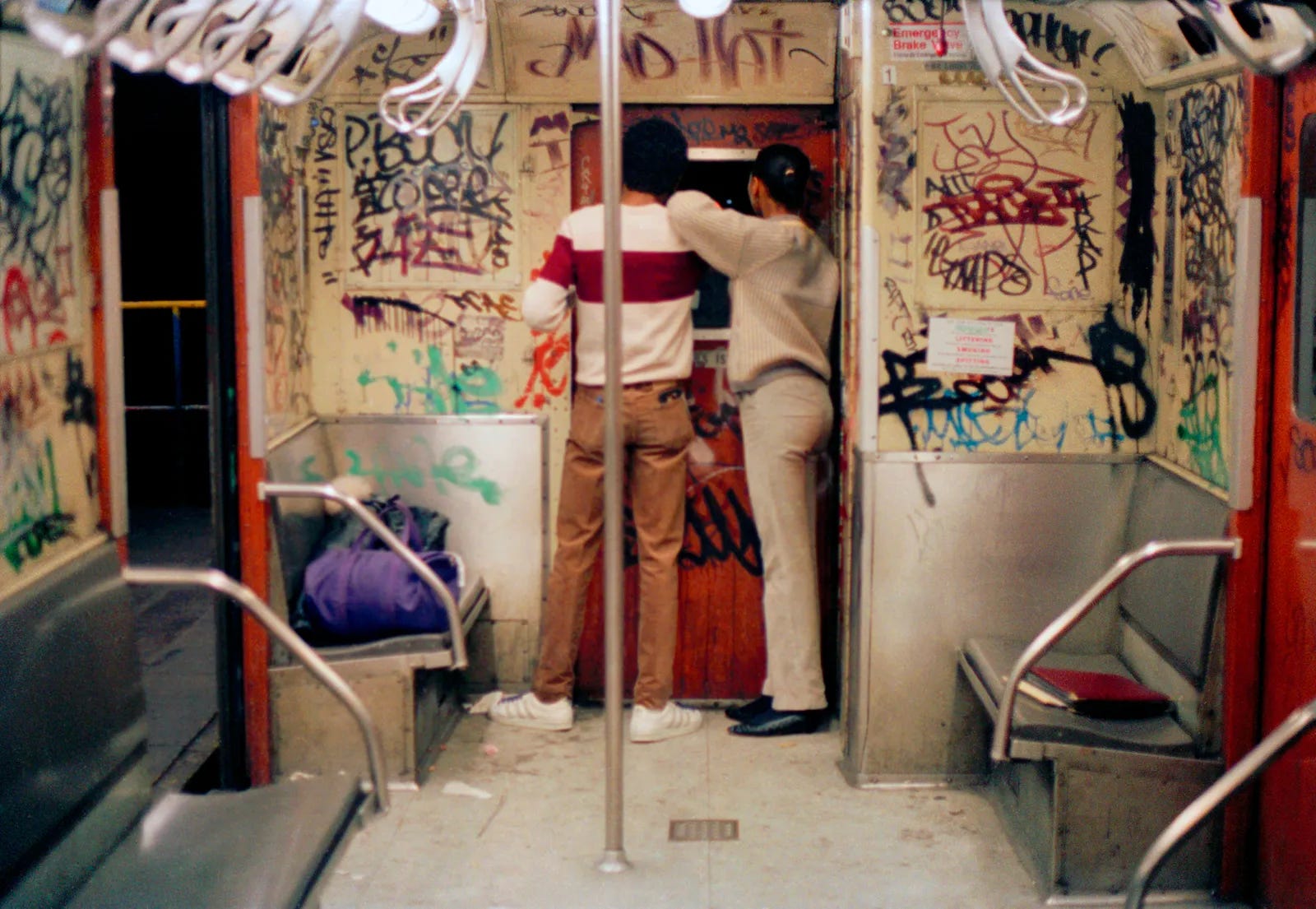
A young man and woman look out the window of a redbird MTA car, early 1980s, the interior is covered with graffiti.
For the past few years I have been working on paintings that reflect on and hopefully point to this history, with the hopes of shedding light on it or giving another angle from which to consider it.
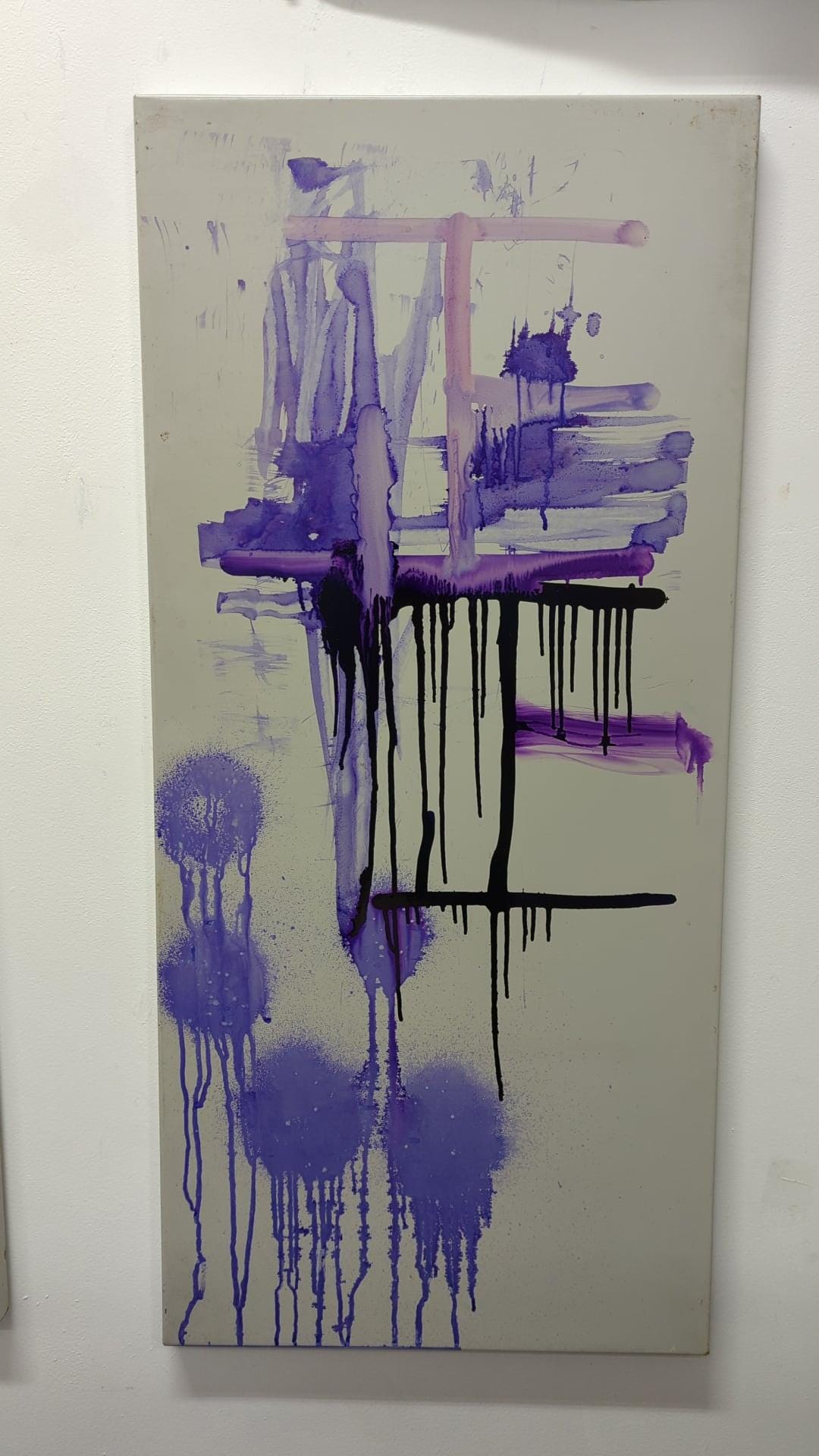
This painting, tentatively titled “5 5 5” was made on a fossil-colored steel panel a few days ago. To create it, I used a clone of the Garvey XT-70 ink called Steve Garvey
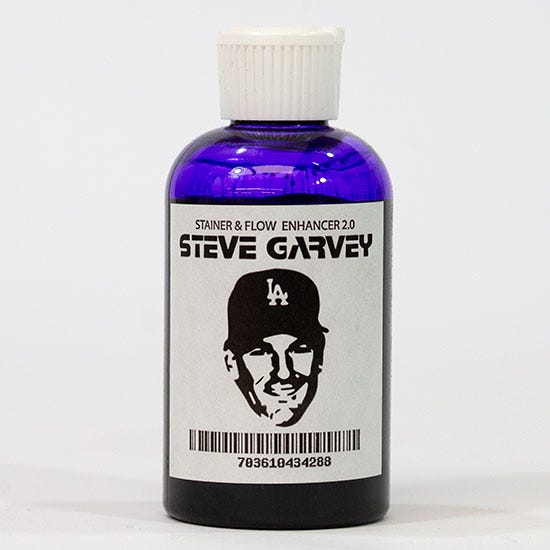
an alcohol-based ink made in Seattle, as well as a homemade version made by steeping carbon copy paper in alcohol for many months, and adding some Methyl Violet (C24H28CLN3) and some other toxic not-so-goodies. Allegedly Garvey ink was originally formulated to stain so strongly because as a price marking ink, especially for frozen foods, it needs to be tough, not fade, and even be able to resist water when in transit or on display. It has since been discontinued. There is a new formula available which apparently serves the purpose of the original XT-70 and even shares the name, but is a different formula, not so extremely permanent in all settings. Some years back, I acquired a chemical remover for Garvey ink, and that is used in the painting as well — the streaky-pink is a result of using that chemical. I have been making my own ink using techniques originated by graffiti writers for a few years now, kind of rekindling my love affair with the medium. I am not as much interested in using elements of style-writing in my painting which are more often present in graffiti/art pieces : wildstyle, fill-ins, tags, et cetera, I have been exploring the Venn diagram of archival/permanent. The ink used by bombers was alcohol-based but also carbon-based, sumi ink is carbon-based as well, but with cattle-glue used as a binder and with fragrances added on to mask that scent. Thousands of years ago in China there was a desire to create an ink that would last, decades ago in the Bronx and Brooklyn, this desire was reborn, but for a very different purpose. Later, that ink and its production was imbued with new spiritual meaning, drawn from Zen Buddhism as well as Taoist thought. What are the philosophies that accompanied the subway writers in New York and elsewhere?


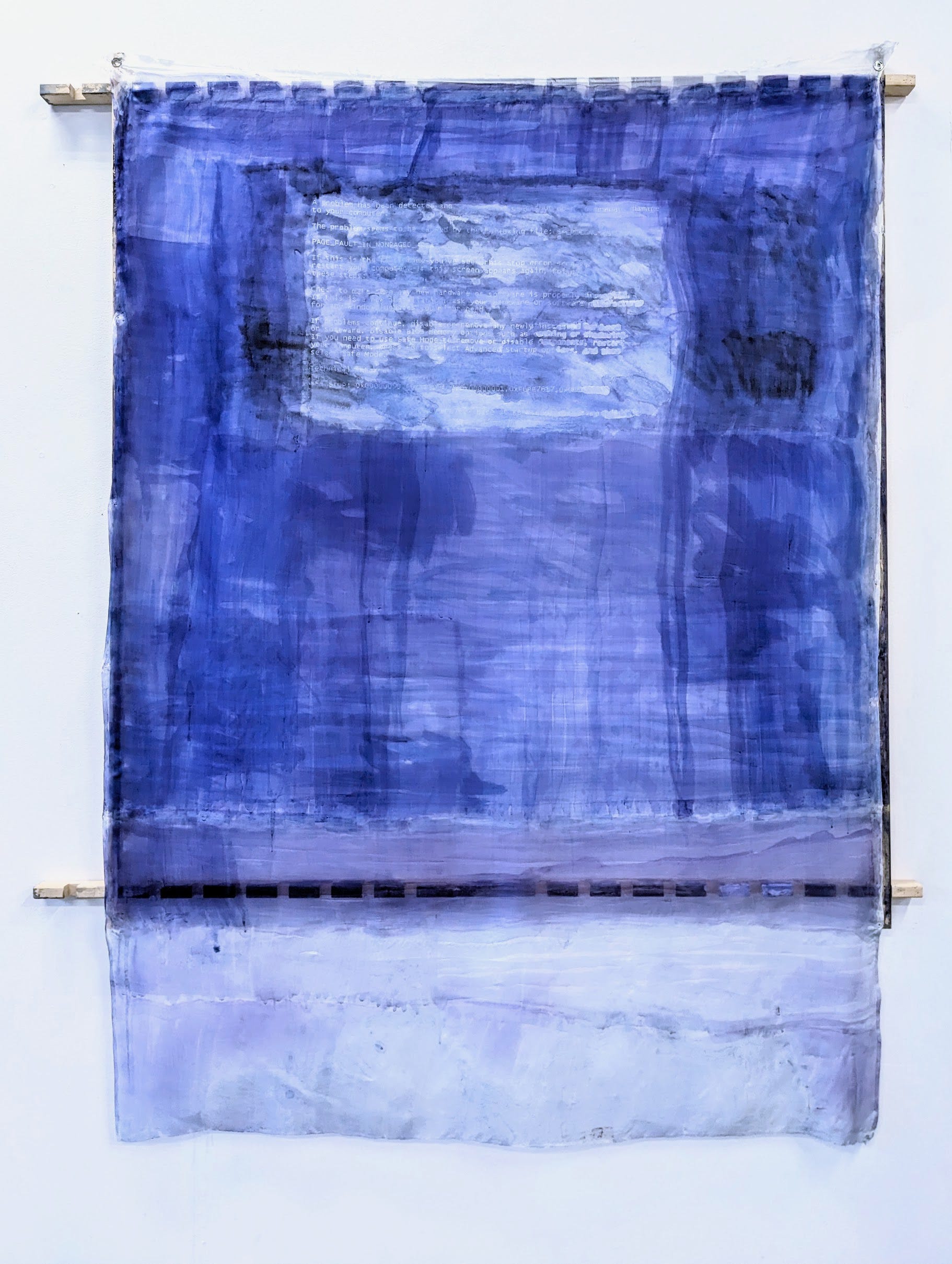
MTA Kiosk 1 (Blue screen of death), 2024, artist-made ink and silk dye on habotai silk
An earlier iteration of the carbon-paper ink. 2025
I can’t help but think about ways that pre-colonial practices survive and mutate and are reborn under duress here in America. Perhaps without having to survive under white supremacy, graffiti in NYC and Philly wouldn’t have happened, ditto placas in Los Angeles. Regardless, I am continually inspired by the lengths people will go to figure out how to express something and leave a mark in a world that just wants their labor and then their disappearance.
Beautifully written. This is my first time coming across your work and *chefs kiss* Thanks for sharing.